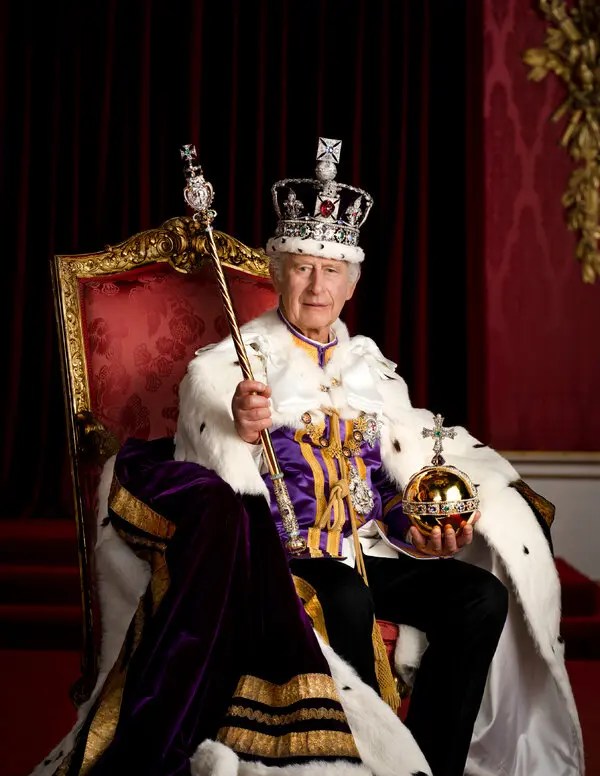
During King Charles III’s coronation, there were anti-monarch protesters with placards that read ‘NOT MY KING. The groups’ quarrel in brief; “Hereditary public office goes against every democratic principle,” they state. “And because we can’t hold the King and his family to account at the ballot box, there’s nothing to stop them abusing their privilege, misusing their influence or simply wasting our money.” – Republic ( an anti-monarch group founded in 1983) Differing from thought and principle, another larger group celebrated the Prince who waited 70 years for the throne to-become King!
Likewise, Uganda has over 21 recognised Kings for the multi-cultural indigenous tribes in the country, and the Kabaka of Buganda the most prominent. Although Kings and cultural leaders are not politicians or heads of the central government, they do wield insurmountable influence and power over society and the leadership. So, the question I asked myself while I watched the bedazzled crowning of England’s 13th monarch since the union was simple but heavy,
HOW IMPORTANT ARE KINGS IN A DEMOCRATIC SYSTEM?
a.Representation.
In a country with over 50 tribes of distinct Languages, norms and traditions, identity and the need to belong is more pronounced. Individuals and families in Uganda attach themselves to respective sects through last names and sometimes dress codes. This is to exhibit their tribal affinity in communities. A definition of who they are, either a muganda, musoga, munyakore, Acholi, Itesot or Langi (to mention but a few). The sense of self, root and originality.. and all this is represented by the Kings, Chieves and Queens crowned. So, like religion and race, tribes do provide a fellowship for so many.
These Tribal leaders therefore, can be and often are, metaphorical symbols of your standing in society. The status of your King can influence or impact your own repute, directly or indirectly. The public services you access and ultimately the environment you call home. They’re at times the voice for their respective tribe to central government. A quite whisperer to the democratically elected men and women in such a multi-tribal nation lobbying for his or her tribesmen. One can say, these institutions fight the bigger battles you can’t fight on an individual level.
b. Preserving History
‘Where did I come from?’ This is a question asked by so many globally who are trying to trace their hereditary origins. This can be a futile endeavour if such monarchs didn’t exist. Contrary to most elected leaders, Kings are tasked and find it as a noble duty to preserve what their fore fathers have left behind and continue the traditions in these evolving times. Without these cultural institutions, history can easily be rubbed away by the next elected leader who doesn’t carry similar political ideologies with the outgoing.
‘Olusesse’ is one of the dying languages in Uganda and the lack of a King or cultural leader is predominantly the reason why. In a century from now, it might be forgotten and gone from people’s minds. Similarly, various tribes are unknown and are a candle in the wind. Imagine your child asking you about their name and you have no idea where it is from, or why it is so?
The Ugandan tourism sector has profitably earned from the existence of these cultural institutions over the years. The reason people come to see your culture is for the uniqueness, beauty and perseverance.
c.Presitige
Pride. Kings offer extended joy and prestige to it’s people. The way you feel when your favourite sports teams win the championship or athlete is awarded the MVP of the year. You feel that you win when they win, loose when they loose, from the sense of belonging comes a sense of prestige too.
THE PROBLEM
In 1967, Obote abolished all Kingdoms when he deemed them a threat to his power and presidency. Similar sentiments have been held by other leaders who have exercised more level-headed tactics in dealing with the influence Kings have on society. Most politicians would rather not have to deal with Kings but likely envy the permanence of position, such cultural leaders hold. Death seemingly being the greater threat to their power and not an election. A king is on the throne for life and what politicians would give to have that.
Other people like the Republic group in England simply feel they should choose their own leader. Not to wait for one birthed down for them.
Today, in most African, European and Asian countries with Kings and cultural leaders, you find a people split in opinion. For and against the monarchy. The United Arab Emirates would be a compelling study for a monarchy that works since many elected leaders have led their countries into destruction scanting over issues of development and economic independence for the general public but rather focus on self improvement and wealth accumulation as fast they can before the next election.
CONCLUSION
Monarchs are likely to exist as long as society does, in whatever form they will in the technological era to come. As of now I think, I’m waiting for an integrated world without borders that will speak one language and see no colour, tribe or race. When this happens then maybe, Kings will no longer serve the innate human need to belong.
ABOUT ME:
I’m a God fearing Ugandan writer, film producer and artist working in the Ugandan media industry for over the last ten years now and am thankful for the experience, the people I’ve met and the modest living I’ve earned along the way. Thank you for reading this blog. You’re a unicorn. So continue being awesome and kindly share with a friend, leave a comment and subscribe to keep in the know of what I write weekly every Friday! See you next time. Stay Kind.
Find me @edrismatu on Twitter, Instagram,YouTube, and Linkedin
 Edris Matu